Optimize Resources to Meet Strategic Objectives
The Tyson Foods’ Office of Animal Welfare (OAW) is comprised of passionate team members who work diligently to guide and support our business units and supply partners in fortifying our responsibility for animal care and handling while driving continuous improvement throughout our supply chain.
The OAW, in collaboration with senior leadership from across the company, is responsible for gaining alignment on animal welfare practices across the company and driving global consensus on new or innovative animal welfare initiatives. We utilize our external Animal Welfare Advisory Panel, an internal Global Animal Welfare Council and a team of animal welfare specialists who are embedded across our business units to deliver on our mission and vision.
Our Office of Animal Welfare oversees the implementation of the FarmCheck® program, which includes engaging with the Animal Welfare Advisory Panel, delivering on research objectives and executing the on-farm verification program. The program uses third-party auditors to check the supplier livestock and poultry farms to ensure they meet a variety of animal welfare criteria, including animal condition, environment, caretaker training and proper human-animal interaction.
Monitoring in International Operations
Animal welfare is a complex issue subject to different laws and formed by varying cultural and societal traditions, norms and viewpoints. Tyson Foods continues to expect that all of our operations and suppliers adopt policies and animal welfare standards consistent with those of our U.S. operations. We are, therefore, working toward continuous improvement internationally and educating our suppliers on best practices in animal welfare. We continually evaluate welfare programs and potential opportunities for improvement in order to provide more cohesive governance and oversight across our entire global supply chain.
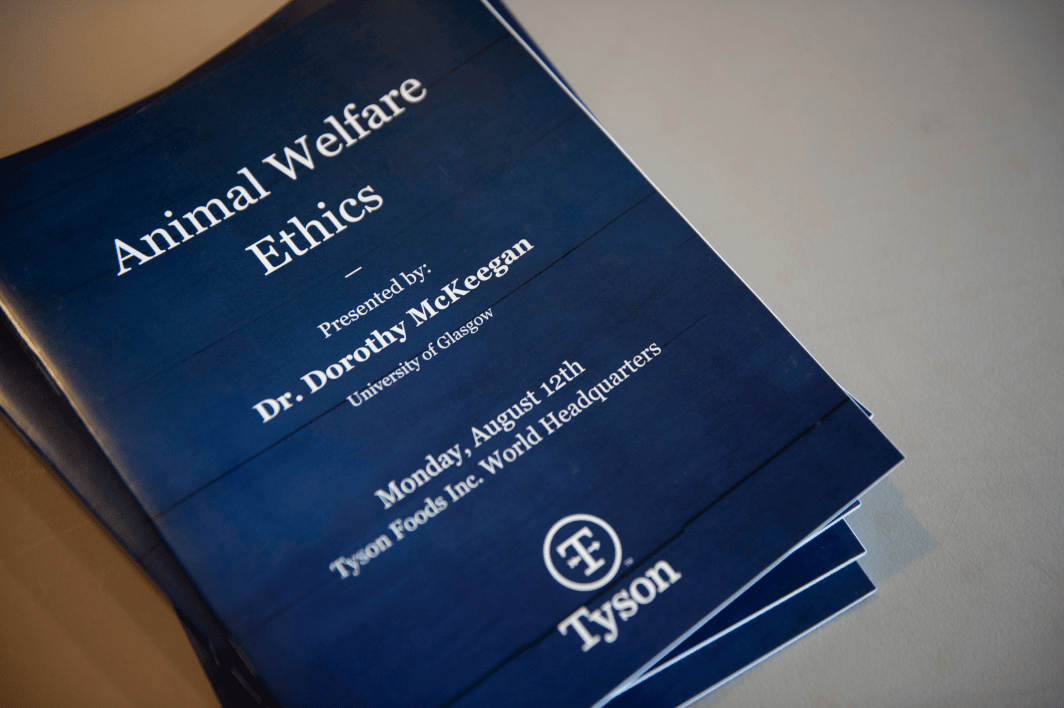
Throughout all Tyson beef, pork and poultry harvest facilities in the U.S., our CARE program — a robust and systematic animal welfare program — is in place to verify that established best practices are used for animal handling and harvest, and to continuously evaluate the processes employed in each facility to identify opportunities for improvement.
CARE has three main components:
- We begin by documenting each step in the animal handling process, from live animal receiving through harvest.
- We then evaluate each step to identify potential incidents that could result in excessive excitement, discomfort or accidental injury to the animal.
- And, if an opportunity for a potential risk or incident exists, we implement changes to mitigate or minimize those risks.
Safe and proper handling includes optimizing stocking densities and travel times, ensuring proper ventilation and protecting the animals from harsh weather conditions during loading, transport and unloading of animals. Our team members and transportation providers are required to follow a rigorous set of guidelines that govern our transportation activities aimed at protecting animals. This training includes basic animal behavior and low-stress handling techniques to facilitate calm, efficient and animal-paced movement, thus decreasing stress and avoiding injuries. All transporters delivering cattle to our beef harvest facilities are required to be certified under the Beef Quality Assurance Transportation (BQAT) program. All drivers who transport hogs must be certified in the Transport Quality Assurance Program developed by the National Pork Board. Verification of each transporter’s training is conducted at live animal receiving at the harvest facilities.
In addition, our chicken and turkey specialists working in our U.S. operations are certified to teach the U.S. Poultry and Egg Association’s Poultry Handling and Transportation (PHT) Certification Program. This program ensures compliance with applicable laws and meets or exceeds North American Meat Institute (NAMI), National Chicken Council (NCC) and National Turkey Federation (NTF) guidelines.
Best-practice system assessments and animal-handling audits are implemented in all of our U.S. chicken, beef, pork and turkey plants, and chicken hatcheries. This approach includes a combination of daily, weekly and annual handling and welfare audits conducted by animal welfare specialists, OAW personnel, plant management, members of our Food Safety and Quality Assurance teams and third-party groups. Plants perform daily internal audits and take part in annual external third-party audits. In addition, all plants have animal welfare committees that conduct assessments and meet monthly to discuss animal welfare performance and areas for improvement.
As part of the CARE program, each of our facilities has an animal welfare committee that conducts assessments and meets at least monthly to discuss animal welfare performance and opportunities for improvement. They work closely with representatives in our Office of Animal Welfare and FSQA groups to identify opportunities and share best practices across the enterprise.
Good animal welfare requires consideration of not only the animals but also the environment that they are in. Because of this, we continue to invest time and resources in our facilities through improvements in lairage structures, flooring, stunning equipment and dedicated research farms. Through a robust animal welfare auditing strategy, we ensure that high standards for animal health and welfare and industry best practices are implemented, enforced and verified across our operations and supply chain.
All Tyson Foods harvest facilities implement video monitoring to audit the areas involved in live animal handling. A designated monitor conducts standardized audits at a frequency established to meet program requirements.
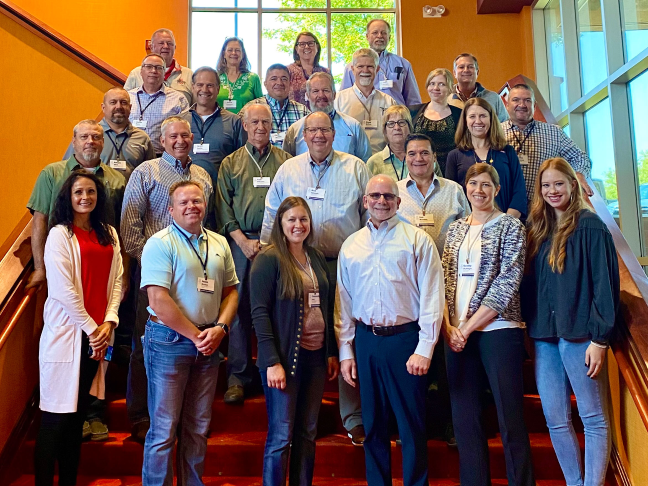
We formed our external Animal Welfare Advisory Panel in 2012 as part of the FarmCheck® program. The panel’s direction helps to ensure we’re taking a leadership position on the most relevant and critical areas of animal welfare.
The Panel’s intent is to maintain a balanced dialogue that includes experts from various fields, including academia, regulatory, production and science, to bring diverse perspectives on animal behavior, health, welfare, production and ethics.
This external panel guides current animal welfare topics and helps to:
- Determine ways to improve our FarmCheck® program
- Advise us on research priorities and projects
- Alerts us to emerging issues or technologies that may affect our industry and business
- Helps us understand proactive approaches we can take to address areas such as ethical issues, consumer interests, and new research and technologies
The Panel continues to help us identify potential gaps and opportunities for improvement in animal welfare, such as focusing our research on poultry lighting, environmental enrichments, facility design and animal housing.
In late 2020, Tyson Foods launched a global initiative to bring together the best animal welfare minds within our newly expanded global company. The result was Tyson Foods’ Global Animal Welfare Council, which meets quarterly to discuss timely and emerging issues, the future direction of the company’s animal welfare program, and to ensure alignment on animal welfare policies and practices throughout our global operations.
Just as we have created the Global Animal Welfare Council to standardize animal welfare across our global operations, Tyson Foods maintains global animal welfare policies to ensure consistency in key areas of program governance.